The suspension system is located between the wheels and the vehicle body, with the wheels connected at the bottom and the vehicle body connected at the top, playing the role of connecting the upper and lower parts and absorbing shock and buffering. The suspension system between the wheels and the vehicle body will automatically compress and straighten to help buffer and prevent rebound, so that the vehicle body can be kept as horizontal as possible, which can greatly improve driving comfort. Common suspension systems on the market are divided into independent suspension, non-independent suspension and semi-independent suspension. The left and right wheels are installed on the same rigid crossbeam, forming a whole. When the right wheel encounters an obstacle and jumps, the left wheel will also jump. This is a non-independent suspension. This type of suspension is simple, reliable and low in cost, but because the two wheels are fixed together, when one wheel is impacted by the road surface, the other wheel will also be affected, so the comfort of the non-independent suspension is poor. It is now mainly used in trucks, buses and some SUV models.
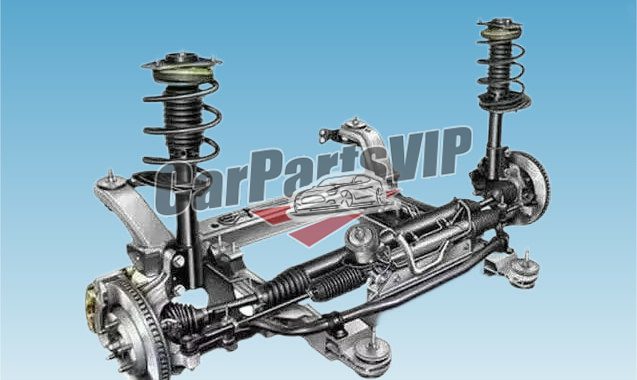
Independent suspension, the two wheels are connected to the body through movable control arms, they can move independently without interfering with each other, so when one wheel is impacted and bounced by the road, it will not affect the other wheel, so the stability of the independent suspension system will be better, and it can absorb the vibration and impact of the road, so its driving comfort will be higher, and at the same time, because the independent suspension system removes the middle rigid axle, it frees up more space, so its cabin space will be larger. At present, the McPherson suspension system is widely used on the market.
The semi-independent suspension system improves the middle rigid beam on the basis of the non-independent suspension system, so that the original rigid beam becomes a torsion beam with a certain elasticity. The torsion beam can withstand a certain degree of deformation. When the right wheel is impacted and bounced, part of the impact force will be consumed by the deformation of the torsion beam, so the left wheel will be affected less, which plays a role in lateral stability. This semi-independent suspension system is what we often call the torsion beam suspension system. Its stability and comfort are generally used in the rear suspension of mid-range cars.